

Tanzania Safari Tours: What to Expect on Your Trip in 2026

The most rewarding Tanzania safari isn’t always the one with the fullest schedule. Tanzania safari tours can mean early starts, hours on the road and unhurried time watching wildlife. The balance depends on the route, landscape and season.
If you’re wondering what each day will actually feel like, start by looking at how the itinerary balances driving, wildlife viewing and rest. Safari days vary, and a guided trip doesn’t have to feel like a one-size-fits-all schedule. The right pace depends on what matters most to you: covering more ground, spending longer in wildlife areas or keeping travel days manageable.
This guide explains what to expect from a typical safari day, how scenery and seasons shape wildlife viewing, and what to consider when choosing a tour style and preparing for your trip. Travel Partner Limited describes itself as 100% Tanzanian-owned. Its safari packages include food and accommodation, with no hidden fees. Read on for practical ways to compare itineraries and choose a trip that suits your priorities.
Table of Contents
What a Tanzania Safari Tour Is Like From Morning to Evening
A Tanzania safari tour combines wildlife viewing, travel between stops and overnight stays. The day has a general structure, but it isn’t a sightseeing timetable with every moment fixed. The route, season, itinerary and wildlife conditions all affect when you set out, where you pause and how long you spend observing.
A safari day follows the landscape and wildlife, not a fixed checklist of sights.
What happens during a typical safari day?
Some days begin early. A morning departure can make good use of daylight for a game drive or a journey to the next stop, though the schedule varies by itinerary. Your guide balances time on the road with pauses to watch animals and take in the surroundings. Depending on the plan, you may return to camp or accommodation for a midday break before more wildlife viewing or another leg of the journey.
Those pauses are part of the experience. They give you a chance to rest between stretches of driving and take stock of what you’ve seen. Tanzania’s varied geography and climate help explain why days can feel different from one area to another. Use the itinerary to understand the broad plan, while allowing for adjustments as the day unfolds.
How much time is spent travelling and viewing wildlife?
There’s no single ratio. A day moving between areas can involve more travel, while a day focused on a wildlife area may allow longer periods of observation and shorter drives between stops. Road conditions, planned breaks and what’s happening around you can all affect the pace. Wildlife sightings aren’t guaranteed or delivered in a predictable sequence. You may spend time watching an animal’s behaviour, or continue exploring if a particular sighting doesn’t happen.
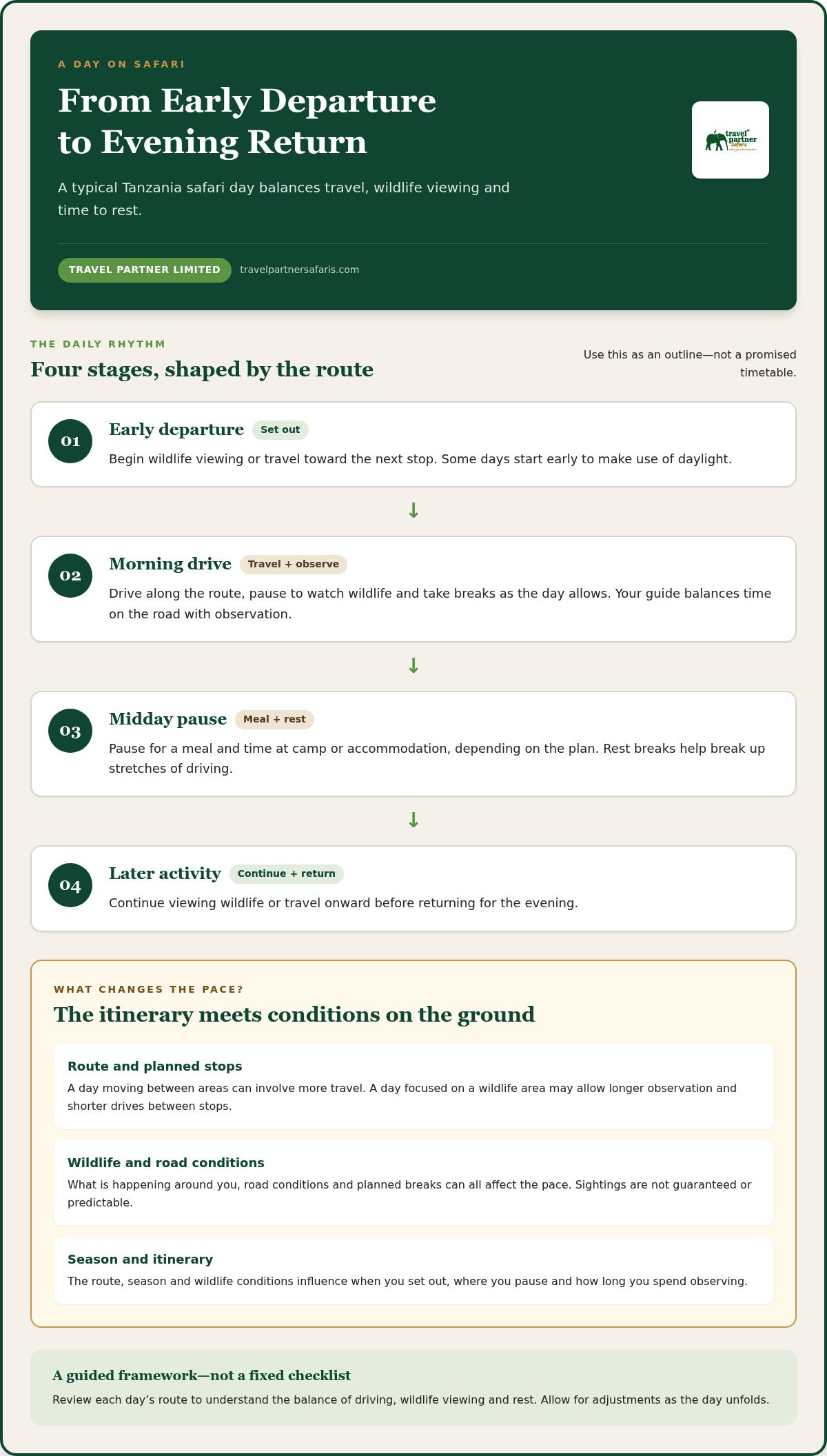
Use this outline as an example of the day’s rhythm, not a promised timetable:
Early departure: Set out for wildlife viewing or begin travelling to the next stop.
Morning: Drive, pause to observe wildlife and take breaks as the route allows.
Midday: Pause for a meal and time at camp or accommodation, depending on the plan.
Later activity: Continue viewing wildlife or travel onward before returning for the evening.
To judge the pace of Tanzania safari tours, look at how each day divides time between driving, observation and rest. A long transfer day feels different from one centred on wildlife viewing, even if both are part of the same trip. Reviewing the daily route helps you picture the experience more clearly than counting stops alone. Expect a guided framework, with the details shaped by the journey and conditions on the ground.
How Tanzania’s Landscapes and Seasons Shape Safari Expectations
A safari’s setting changes what you see from the vehicle and how the day feels. Open grasslands offer wide views, while wooded areas and varied terrain create different sightlines and scenery. Season matters too, but it isn’t a simple calendar promise. Rainfall, vegetation, route and animal movement interact, so the same destination can feel different at different times.
What makes the Serengeti, Ngorongoro and Tarangire distinct?
These destinations offer contrasting scenery. One is known for broad plains and expansive views; another has a more enclosed setting with grassland, woodland and wetland habitats. A third combines savanna and woodland, with distinctive baobab trees shaping the landscape. A multi-stop journey can offer variety, but don’t assume every itinerary includes all three destinations.
Think about the kind of landscape you most want to experience, not only the names on a route. Broad plains may appeal if you value open horizons; a crater setting brings a different sense of scale, while a mix of trees and savanna offers another visual character. Habitat can influence where animals may be found and how easily they can be seen, but it doesn’t guarantee a particular encounter.
How should travelers think about seasons and wildlife sightings?
Rainfall can change vegetation and the appearance of the landscape. As plants grow, some animals may be harder to spot in thicker cover; drier conditions can leave views more open in some areas. Animal movement also responds to changing food and water conditions. These are broad patterns, not a dependable forecast for one route or travel date.
Timing can shape the landscape and viewing conditions, but it can’t promise which animals you’ll see. Wildlife is free to move, and sightings vary from day to day. A guide may adjust the route in response to conditions, but the experience is best approached with curiosity rather than a fixed list of expected encounters.
For planning, weigh season alongside your route, interests and available travel dates. Ask yourself whether you care most about a particular landscape, a varied journey or travelling at a time that works for you. Then look at how the itinerary connects destinations rather than choosing dates based on an exact prediction of animal movement. This keeps expectations realistic and helps you compare safari packages by the overall experience they offer.
Travel Partner Limited describes itself as 100% Tanzanian-owned. Once you have a sense of the scenery and seasonal trade-offs that matter to you, explore Tanzania safari packages and consider which route best matches your priorities.
Which Tanzania Safari Tour Style Fits Your Travel Priorities?
A guided safari has a plan, but that doesn’t mean every moment is rigid. The route and overnight stops provide structure; the guide coordinates the day around the itinerary and conditions. Private and shared travel differ in who travels together, how decisions are made and how much room there may be to adjust the pace. Neither format suits everyone. Start with the kind of experience you want.
Private or shared: what changes during the tour?
With a private tour, the vehicle and day are arranged for your travelling party. Depending on the itinerary, this can allow more flexibility around pauses and how time is spent. In a shared tour, you travel with other guests, so decisions and timing are coordinated for the group. That can bring conversation and shared excitement, but there may be less scope to shape each stop around one person’s preference.
These are general trade-offs, not guarantees about any one itinerary. Wildlife sightings remain unpredictable in either format, and a guide may need to adapt to conditions. A planned structure helps coordinate travel and stops; it doesn’t determine what animals will appear or exactly how long an encounter will last.
How do pace and comfort preferences affect the right fit?
Look beyond the format name. Consider how you feel about early starts, long stretches on the road and downtime between activities. Then decide what kind of accommodation experience suits you, from the setting you prefer to the level of comfort you want at the end of the day. Treat comfort as a personal priority, not a label that tells you exactly what a tour provides.
Use these questions while reviewing an itinerary:
For pace: How often does the plan involve early departures or longer drives?
For downtime: Is there time to pause at the accommodation between activities?
For comfort: What accommodation style and features matter most to me?
For group fit: Do I value flexibility with my own party, or meeting fellow travellers?
Travel Partner Limited quotes safari package prices per person for groups of up to six. To compare Tanzania safari tours, use your preferred pace, group dynamic and comfort needs as practical filters, then review how each itinerary fits those priorities. You can explore Tanzania safari packages with those needs in mind.
How to Prepare for a Tanzania Safari Tour Without Overpacking
Good preparation starts with your itinerary, not a generic packing list. Travel days, overnight stops and planned activities determine what you’ll need close at hand and what can stay packed away. Reviewing the route first helps you travel comfortably without filling your bag with items that don’t suit the trip.
What should you review before departure?
Read the itinerary from start to finish. Note travel days, overnight stops, activity pacing and transitions between locations. This gives you a realistic sense of what you’ll carry during the day and when you’ll have access to your main luggage. Keep essential documents and personal items together, organised and easy to reach when needed.
Before travelling, check official government sources for current entry requirements, health guidance and travel advisories. Requirements can depend on your circumstances and may change, so use up-to-date information for your own trip rather than relying on an old checklist or a general online summary.
Review the route: Mark overnight stops, longer travel days and activities so you can pack for the itinerary you’re taking.
Organise documents: Keep travel documents and important personal information together in a secure, accessible place.
Check official guidance: Review current entry, health and advisory information before departure, and allow time to prepare for any requirements that apply to you.
Pack for your needs: Choose practical clothing and bring personal essentials you may want during the day.
What helps make long safari days more comfortable?
Choose light, practical clothing that’s easy to layer as conditions change. Comfortable layers let you adapt without packing a separate outfit for every part of the day. Plan for sun protection during time outdoors as well. For detailed clothing recommendations, use current destination guidance and the activities on your itinerary; conditions aren’t identical across every route or date.
Think about small personal comforts you might need between accommodation stops. Keep daily-use items, personal medication and other essentials you rely on accessible rather than buried in luggage. Pack selectively: if you’re unsure an item will be useful, consider whether it suits a specific activity, travel day or personal need. The aim is to be ready, not to carry a backup for every possibility.
Clothing: Pack comfortable layers suited to changing conditions and your planned activities.
Sun protection: Include items that help you stay comfortable while spending time outdoors.
Personal essentials: Keep necessary daily-use items accessible during travel and activities.
Documents: Store important travel papers securely, with the items you may need easy to reach.
Leave some room for flexibility. Weather, road conditions and wildlife activity can affect how a day unfolds, so plans may shift. A practical bag and an itinerary you’ve reviewed make those changes easier to manage. Once you’ve considered your route and preparation needs, explore Tanzania safari packages to find an option that fits the kind of trip you’re planning.
Plan a Tanzania Safari Tour Around What Matters Most to You
A clear plan starts with your priorities, not a long list of parks or activities. Decide what you most want from the journey, then consider your preferred pace, travel timing and tour format. Once those choices are clear, review the itinerary closely. You’ll be better placed to see whether the route, activity balance and overnight stops suit the trip you have in mind.
Turn your priorities into a shortlist
Rank what matters most: wildlife interests, landscapes, accommodation comfort or a slower pace. A preference for open scenery may point you towards a different route than a desire to experience several kinds of habitat. If you value group interaction, a shared format may appeal; if flexibility matters more, consider how a private format fits your plans.
Use this sequence to narrow your choices:
Set your priorities: Choose the experiences and comforts that matter most to you.
Choose your pace: Decide how you feel about early starts, travel time and downtime.
Consider timing: Match your available travel dates with the route and experience you want, without treating the season as a promise of particular sightings.
Select a format: Weigh the flexibility of private travel against the shared experience of travelling with a group.
Review the itinerary: Look at the route, activity balance and overnight stops to understand how the trip fits together.
Give the itinerary a practical read. A route may look appealing on paper, but the sequence of stops and time spent travelling affect how each day feels. Check that the plan gives appropriate space to the interests you ranked highest. This is also a good moment to notice what you’re willing to trade off: visiting more destinations may mean a different pace than spending longer in one area.
What to expect when exploring Travel Partner safari packages
Travel Partner Limited describes itself as a 100% Tanzanian-owned operator offering safari packages in Tanzania. Package prices are quoted per person for groups of up to six, so you can factor group size into your comparison.
Food and accommodation are included in the packages, and the company states that there are no hidden fees. Consider those inclusions alongside the itinerary itself: the right choice should suit both the experience you want and the practical shape of your trip.
With your priorities and pace in mind, take the next step and Explore Tanzania safari tours with Travel Partner.
Take the Next Step Toward Your Tanzania Safari
Your plans don’t need to answer every question before the adventure begins. Start with one guiding choice: what would make this trip feel meaningful to you? It might be time in a particular kind of landscape, a relaxed pace or the chance to share the experience with others. Let that priority shape your next decision, while leaving room for the unexpected moments that make a journey your own.
As you consider Tanzania safari tours, look for an itinerary that feels clear and balanced for your needs. A thoughtful plan can help you feel prepared while still leaving room to enjoy the journey as it unfolds.
Travel Partner Limited describes itself as a 100% Tanzanian-owned operator. Its safari packages include food and accommodation, with no hidden fees, and prices are quoted per person for groups of up to six. Compare the package details with the trip you have in mind.
Explore Tanzania safari tours with Travel Partner, and take the first step toward an adventure to remember.
Frequently Asked Questions
How much do Tanzania safari tours cost?
Costs depend on trip length, accommodation, travel dates and tour format, so compare the itinerary’s inclusions rather than relying on a headline figure alone. Travel Partner Limited quotes package prices per person for groups of up to six. For a closer look at the factors that affect safari pricing, read the Tanzania safari prices guide before comparing options. This helps you assess what each package covers for the trip you want.
Is a Tanzania safari suitable for first-time safari travelers?
Yes, a guided safari can be a comfortable introduction because the operator organises the route and overnight stops. Before choosing, consider what would help you feel at ease: knowing the day’s plan in advance, having time to ask your guide questions or keeping travel days manageable. Read the itinerary closely and allow expectations to stay flexible. The experience can be rewarding even when wildlife sightings differ from what you imagined.
Do Tanzania safari tours guarantee wildlife sightings?
No, sightings of particular wild animals can’t be guaranteed. Wildlife moves freely, and what you see can depend on location, season, weather and chance. A guide can help interpret the landscape and look for signs of animal activity, but nature doesn’t follow a schedule. Choose a tour for the full experience, including scenery, learning and time outdoors, rather than booking around one promised encounter.
Do I need a visa to travel to Tanzania?
Visa requirements depend on your nationality, travel purpose and the rules in effect for your trip. Check current information through official Tanzanian immigration sources and your own government before booking or travelling. Confirm passport validity and any application steps directly with those authorities. Requirements can change, so an older article or another traveler’s experience shouldn’t be your final guide. Build time into your plans to complete any required application.
Are vaccinations required before a Tanzania safari?
Health recommendations and entry rules vary according to your circumstances, itinerary and current guidance. Speak with a qualified travel-health professional well before departure, and consult official health advice for your country and destination. Share your planned route and travel dates so the advice is relevant to your trip. This article isn’t medical guidance. Use current professional recommendations rather than relying on a general online checklist.
Should I carry cash on a Tanzania safari tour?
Some local spending money may be useful, but the amount and payment options you need depend on your itinerary and personal habits. Check current currency guidance before departure, and ask your bank about card access, fees and travel notifications. Don’t assume cards are accepted at every stop or that payment methods are the same throughout your trip. Keep cash secure and carry only what you expect to need.
Is tipping expected on Tanzania safari tours?
Tipping customs can vary by tour, service and personal preference, so there isn’t one amount that applies to every traveler. Review any guidance provided with your itinerary, then decide what feels appropriate for the service you receive and your budget. Treat suggestions from unrelated sources as examples, not universal rules. If you plan to tip, bring suitable small denominations and keep gratuities separate from your other travel spending.


Comments